
Step 1 of 5 — The Core Decision
Steel or Graphite? This Choice Comes First.
Every other shaft decision — weight, flex, launch profile — only makes sense after you've answered this one. Steel and graphite are not interchangeable options at different price points. They are fundamentally different tools built for fundamentally different swings. Getting this wrong is the most common and most expensive mistake in iron shaft fitting. Here's how to get it right.
-
![]()
Steel
- Heavier (95g–130g+) — adds stability and resistance through impact, which faster and more aggressive swings need
- Firmer, more direct feel at impact — tells you exactly what the ball did, good and bad
- Lower torque (1.5°–2.5°) — resists twisting through the hit, tightening shot dispersion
- Consistent gapping — heavier shafts make it easier to control distances between clubs
- Lower cost per shaft — most steel iron shafts run $15–$50 each
Choose steel if: your 6-iron carry is 165+ yards, your tempo is moderate to aggressive, and you do not have joint pain. Steel is the default for most players who hit their irons a reasonable distance.
-
![]()
Graphite & Composite
- Lighter (50g–100g) — lets slower swing speeds generate more clubhead speed without extra effort
- Vibration dampening — dramatically reduces the harsh feedback at impact that aggravates elbow and wrist pain
- Higher torque (2.5°–5.5°) — softer feel, more active tip section, easier to launch the ball
- Composite shafts (SteelFiber, MMT) bridge the gap — graphite weight with steel-like feel and feedback
- The performance gap between quality graphite and steel has closed significantly in the last decade
Choose graphite if: your 6-iron carry is under 160 yards, you have joint pain in your hands, wrists, or elbows, or you play with a smooth unhurried tempo and want to maximize carry distance.



-
Under 90g - Lightweight
Built for players whose swing speed needs help — not more resistance. A lighter shaft moves faster with less effort, which translates directly into more carry distance for moderate and slower swing speeds.
Right for you if: your 6-iron carry is under 160 yards, you play graphite, or you currently feel like you're fighting the club through impact instead of swinging through it smoothly.
-
95g–115g - Mid-Weight
The category that covers the widest range of players. Heavy enough to provide stability and consistent gapping, light enough that moderate swing speeds don't have to fight the weight. Most steel iron shafts live here.
Right for you if: your 6-iron carry is 155–185 yards and you want predictable, repeatable distances with minimal effort. The correct starting point for the majority of amateur golfers.
-
120g–130g+ - Tour-Weight
Designed specifically for fast, aggressive transition players who generate enough speed to over-power lighter profiles. The extra mass resists unwanted shaft bend and prevents the ballooning, high-spin flights that lighter shafts produce at high speed.
Right for you if:your 6-iron carry exceeds 185 yards, you have an aggressive quickfire transition, and your current irons tend to balloon or lose distance in the wind.
Low Launch / Low Spin
Your miss looks like:
Shots that balloon and get knocked sideways by the wind. A high weak fade that loses distance and won't hold greens. Irons that go the same height regardless of which club you hit. This is almost always a tip stiffness problem — your current shaft is flexing too much at the tip.
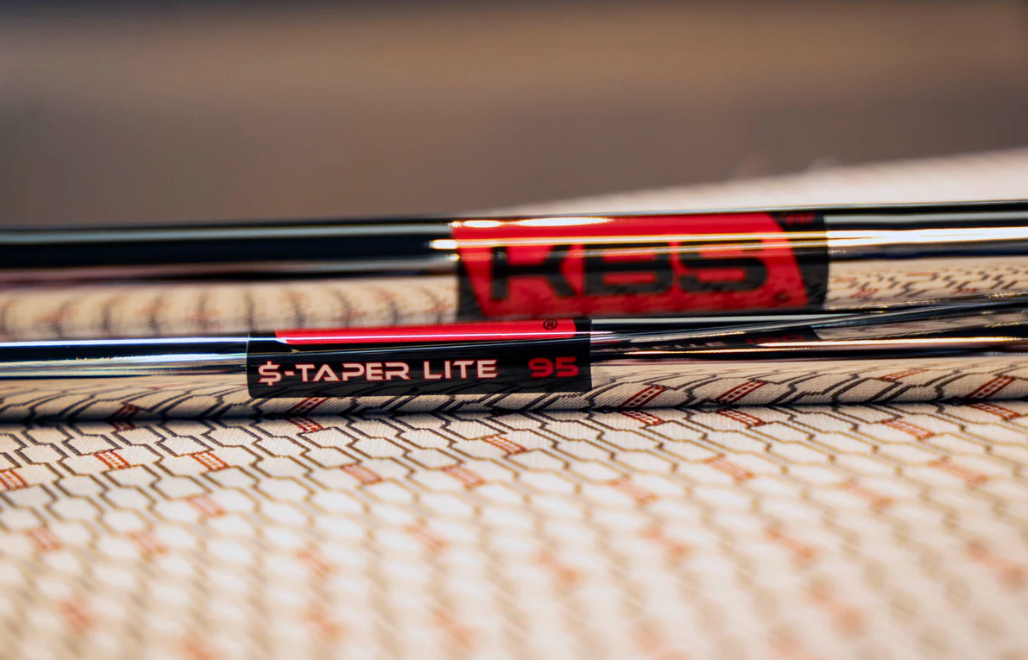
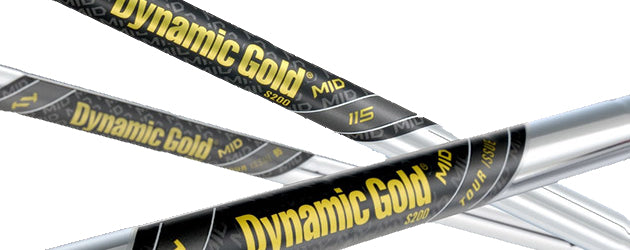
The Fix - A firmer tip section and heavier overall weight resists the shaft bending that creates high spin. Dynamic Gold , C-Taper , and Modus3 Tour 120/130 are all built to suppress spin and bring the flight down.
Example shafts: True Temper Dynamic Gold Tour Issue, KBS C-Taper, Nippon Modus3 Tour 120/130
Mid Launch / Mid Spin
Your miss looks like:
A ball flight you're mostly happy with — not dramatically high or low — but you want tighter consistency between clubs or better shot-to-shot repeatability. You hold most greens from reasonable distances but the trajectory doesn't need a fundamental change.
The Fix - Stay in the mid-weight, mid-flex range and focus on getting the weight right for your swing speed. Small weight adjustments produce meaningful changes in gapping consistency — this is where most club fitting improvements happen for the average amateur.
Example shafts: KBS Tour, Nippon Modus3 Tour 105, True Temper Dynamic Gold 105
High Launch / High Spin
Your miss looks like:
A low, running ball that can't hold greens from approach distances. Irons that never get to peak height. Struggling to get the ball airborne, especially with longer irons. This typically means the shaft is too stiff or too heavy for your swing speed — there isn't enough tip activity to launch the ball.
The Fix - A softer tip section and lighter overall weight lets the shaft load and release more actively through impact, generating the height and spin needed to stop the ball on greens. This is where graphite, composite, and lightweight steel profiles solve real scoring problems.
Example shafts: UST Recoil Dart, Nippon Zelos 7/8, True Temper XP 95, Aerotech SteelFiber i80
Tip Diameter
Taper vs. parallel tip is a hard compatibility requirement. Iron shafts come in two tip sizes and they are not interchangeable. Order the wrong one and the shaft will not fit your irons without modification. Check which tip your irons require before ordering anything.
Playing Length
Shaft length is not the same as playing length. The final playing length of your club is the measurement from the butt of the grip to the ground when the club sits at its natural lie angle. This is determined by the trimmed shaft length plus the depth the hosel adds when the head is installed.
Always measure finished club butt to ground on a reference iron before specifying shaft lengths for a full set. Ordering shafts to the wrong length is the single most common custom build error.
Utility Iron Builds
If you're building a utility iron or driving iron on an OEM adapter sleeve (Titleist, TaylorMade, Callaway, Ping), the adapter itself adds length between the shaft tip and the hosel. This is easy to miss and costly when you don't.
Measure adapter tip to grip end on a reference club of the same head before ordering shaft lengths. Missing this step typically throws swingweight off by 2–3 points per club.
Your swing is unhurried and rhythmic — you generate speed through sequencing rather than aggression. A lighter shaft works with your tempo to produce more carry without requiring you to swing harder. This is also the right profile if joint pain has started to affect your game.
You load the shaft hard at the top and transition fast. Lighter shafts feel unstable and produce inconsistent ball flights — you need weight to feel in control. Your irons may balloon in the wind or spray more than you'd like. The fix is almost always a heavier, firmer profile.
Your ball striking is improving but not yet consistent. You need a shaft that rewards good strikes without punishing the occasional mishit. A mid-weight profile with a slightly softer tip is more forgiving — it narrows the gap between your best and worst shots.
Shop Iron Shafts by Category
Every shaft we carry is an authorized, in-stock component — sold individually or as a full set, and ready to ship.
Frequently Asked Questions
Steel or graphite irons — which should I play?
Steel or graphite irons — which should I play?
Choose based on speed and feel, not price. Steel (about 95–130 g) suits players whose 6-iron carry is 165 yards or more, with a moderate-to-aggressive tempo and no joint pain — it gives a firmer feel, lower torque and tighter dispersion. Graphite and composite (about 50–100 g) suit slower or smoother swings, a 6-iron carry under 160 yards, or anyone with hand, wrist or elbow pain, because the lighter weight adds speed and the material dampens impact vibration. Modern composite shafts such as SteelFiber narrow the old feel gap between the two.
How do I choose iron shaft weight and flex?
How do I choose iron shaft weight and flex?
Set weight first, then flex. Lightweight shafts (under 90 g) help moderate and slower swings add carry; mid-weight (95–115 g) covers most amateurs and gives consistent gapping; tour-weight (120 g and up) suits fast, aggressive transitions that overpower lighter profiles. Flex only has meaning within a weight — a Stiff 95 g shaft plays much softer than a Stiff 130 g shaft — so lock in your weight range before choosing flex. Because the right combination depends on your swing, a fitting is the most reliable way to confirm it.
What do taper tip (.355") and parallel tip (.370") mean, and which do my irons need?
What do taper tip (.355") and parallel tip (.370") mean, and which do my irons need?
Iron shafts come in two tip sizes that are not interchangeable. Taper tip (.355") is used by many classic blades, older forged irons and some current players' irons, and each iron in the set needs a different shaft length. Parallel tip (.370") is used by most modern cavity-back and game-improvement irons, and a single shaft can be tip-trimmed to fit any iron in the set. Check which tip your irons require before ordering, because the wrong tip will not fit without modification.
True Temper vs KBS vs Nippon — how do they compare for steel iron shafts?
True Temper vs KBS vs Nippon — how do they compare for steel iron shafts?
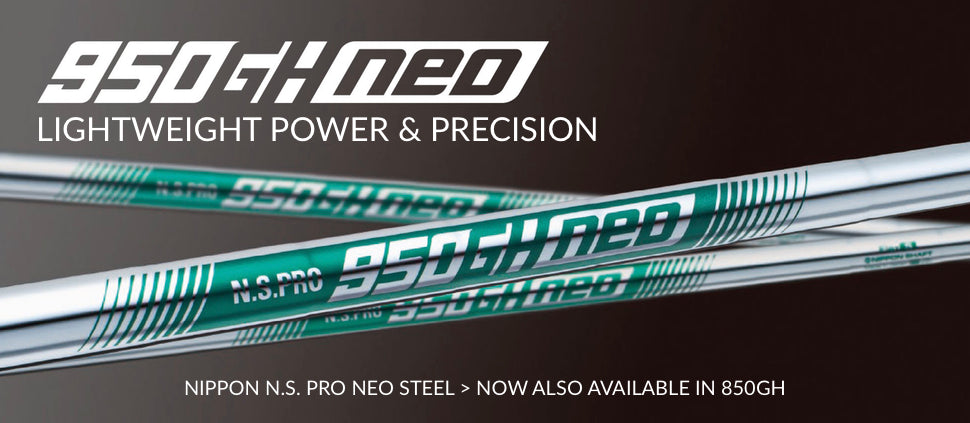
All three make tour-proven steel; the right pick comes down to weight, flight and feel rather than brand. True Temper Dynamic Gold is the heavy, low-launch reference at roughly 127–130 g. KBS C-Taper runs about 110–130 g with a low, piercing flight, while the KBS Tour family is a mid-flight all-rounder. Nippon's Modus3 Tour 120 (about 111–126 g) is a control benchmark, the 950GH neo (about 95–104 g) is light and easy to launch, and Zelos 7 (about 74–78 g) is the lightest steel for smooth tempos. See our True Temper , KBS and Nippon guides to go deeper.
Can I buy iron shafts individually or as a set, and are they installed?
Can I buy iron shafts individually or as a set, and are they installed?
Yes — we carry iron shafts as single shafts and as full sets, in the flexes and lengths shown on each product page, and in-stock orders ship fast. They are sold as component shafts, not installed in clubheads, so if you want help confirming weight, flex or tip size before ordering, just reach out. Browse everything on our iron shafts collection.
You Know What You Need. Now Go Get It.
Browse our full selection of iron shafts — steel, graphite, and composite — all from authorized brands, in stock and ready to ship. Or take the quiz for a personalized recommendation with specific products.
Featured collection
View all-

Nippon N.S. Pro Modus3 Tour 105 Iron Shaft (0.355" Taper Tip)
$62.00 CADUnit price / -


True Temper Dynamic Gold Iron Shaft (0.355" Taper Tip)
$48.00 CADUnit price / -
Project X Rifle Iron Shaft (0.355" Taper Tip, Chrome)
$71.00 CADUnit price / -

Nippon N.S. Pro Modus3 Tour 120 Iron Shaft (0.355" Taper Tip)
$62.00 CADUnit price / -

Mitsubishi MMT Taper Iron Shaft (0.355" Tip)
$123.00 CADUnit price / -
True Temper Dynamic Gold Tour Issue Iron Shaft (0.355" Taper Tip)
$68.00 CADUnit price / -
Project X LZ Iron Shaft (0.355" Taper Tip, Chrome)
$79.00 CADUnit price / -
Nippon N.S. Pro 950GH Iron Shaft (0.355" Taper Tip)
$42.00 CADUnit price /


